
ASIC mining is no longer just about plugging in a machine and waiting for rewards. In 2026, miners need to make smarter decisions every day because profitability can change quickly. Bitcoin price, mining difficulty, electricity costs, hardware efficiency, uptime, and cooling all affect how much a miner can actually earn.
A setup that looked profitable last month may not perform the same today. That is why miners need current data before buying hardware, changing coins, or scaling their operation.
At AsicProfit, miners can compare ASIC miners, estimate electricity costs, calculate ROI, and make better decisions using real profitability data.
Why Smarter Mining Decisions Matter Today
Mining is a numbers-based business. Many miners focus only on daily revenue, but daily revenue does not show the full picture. Real profit depends on what remains after electricity costs, downtime, pool fees, hardware wear, and market changes.
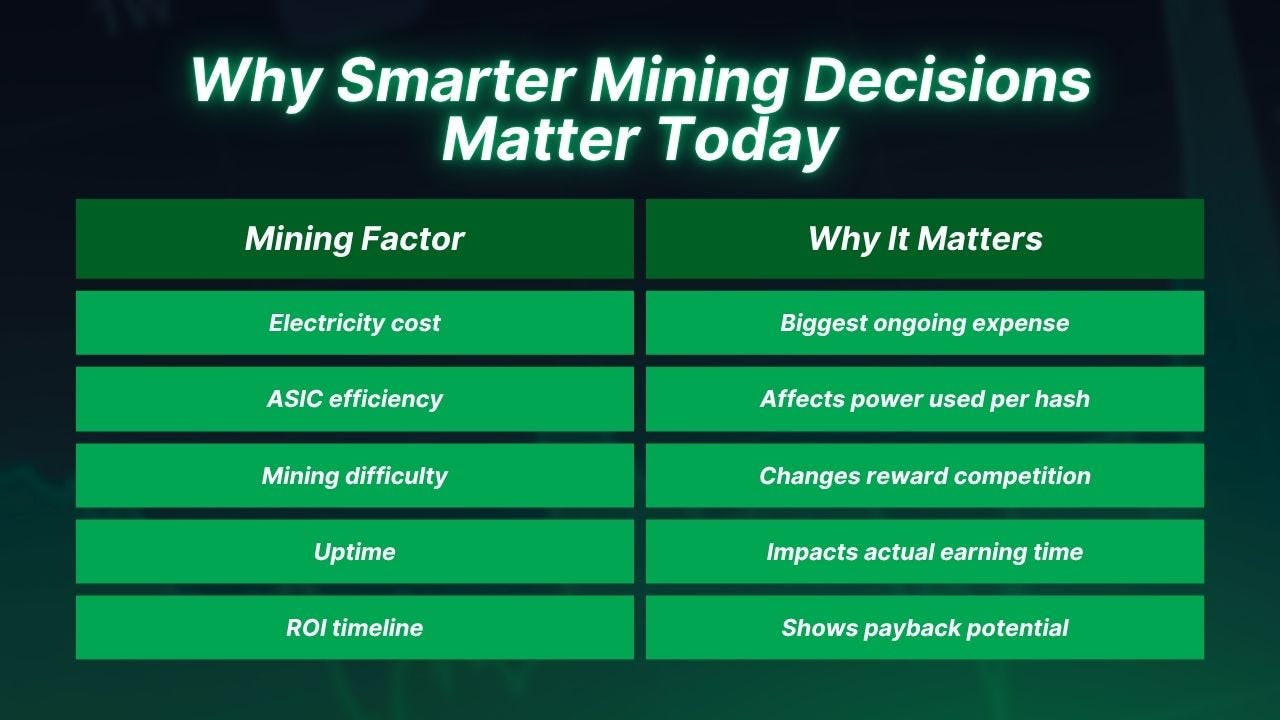
A miner with a high hash rate may look attractive, but if it uses too much electricity, the real profit can be much lower than expected. This is why smart miners look at the full setup before making decisions.
The goal is not just to mine more. The goal is to mine profitably.
Decision #1: Check Electricity Costs First
Electricity is usually the largest expense in ASIC mining. Even a small difference in electricity rate can create a major difference in monthly and yearly profit.
For example, a 5.5 kW ASIC miner running 24/7 uses about 132 kWh per day. At $0.06/kWh, the estimated monthly cost is around $238. At $0.08/kWh, it rises to about $317. At $0.10/kWh, the same miner can cost around $396 per month.
That means a miner paying $0.10/kWh may spend nearly $1,900 more per year than a miner paying $0.06/kWh for the same machine.
Before buying or running any ASIC miner, calculate the electricity cost first.
Use the AsicProfit calculator here: https://asicprofit.com/calculator
Decision #2: Compare Efficiency, Not Just Hash Rate
Hash rate is important, but it is not the only number that matters. Efficiency is often the better indicator of long-term profitability.
ASIC efficiency is measured in J/TH, or joules per terahash. A lower J/TH means the miner uses less electricity to produce hash power.
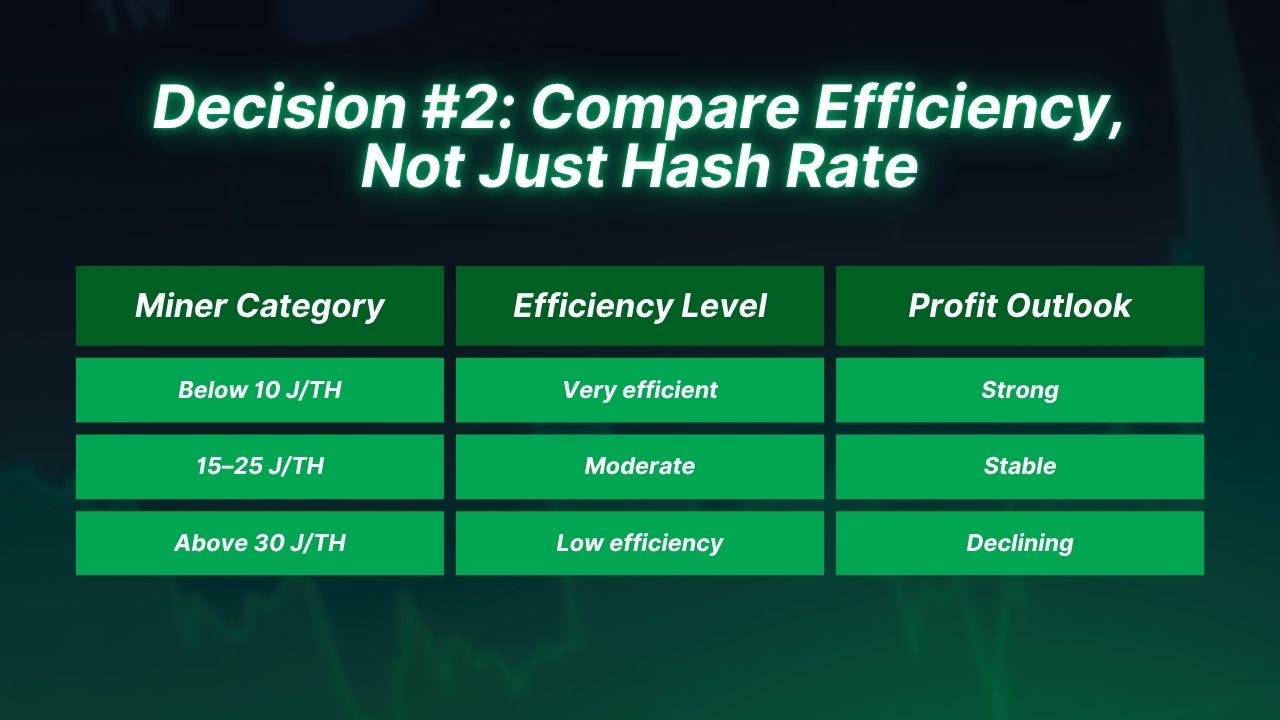
Modern ASIC miners below 10 J/TH usually have a stronger advantage because they produce more output while using less energy. Mid-range miners can still work well when electricity is affordable. Older miners above 30 J/TH may become difficult to run profitably unless power costs are very low.
Compare ASIC miners here: https://asicprofit.com/miners
Decision #3: Recalculate Profitability Often
Mining profitability changes regularly. Bitcoin price can move, network difficulty can increase, and electricity rates can affect margins.
A miner that looked profitable last week may have a different result today. That is why miners should avoid relying on old screenshots, old estimates, or outdated calculator results.
External market data can be checked through CoinMarketCap: https://coinmarketcap.com/currencies/bitcoin/
Smart miners recalculate profitability before:
- Buying new hardware
- Switching coins
- Choosing a hosting provider
- Expanding a mining setup
- Selling or holding mined coins
A few minutes of calculation can prevent costly mistakes.
Decision #4: Watch Uptime and Cooling
A miner only earns when it is online and running properly. Downtime, overheating, poor airflow, and unstable internet can reduce real profits.
Heat is one of the most common causes of performance loss. When ASIC miners overheat, they may throttle performance, lower hash rate, or consume power less efficiently.
To protect mining performance, miners should:
- Keep airflow clean and stable
- Remove dust from fans and vents
- Monitor miner temperature
- Check pool connection regularly
- Review uptime reports
A stable miner with good cooling can often outperform a stronger miner that keeps overheating or going offline.
Decision #5: Review ROI Before Scaling
Scaling a mining operation can be exciting, but it should always be based on ROI. Buying more machines does not automatically mean earning more profit.
If electricity costs are high or efficiency is poor, scaling can increase expenses faster than revenue.
Before scaling, miners should ask:
- How long will it take to recover the miner cost?
- What is the monthly electricity expense?
- What happens if difficulty increases?
- Can cooling and power infrastructure handle more machines?
- Is the setup still profitable after all costs?
ROI planning helps miners grow carefully instead of taking unnecessary risk.
Calculate your ROI now: https://asicprofit.com/calculator
Decision #6: Compare Coin Profitability
Bitcoin remains the most popular coin for ASIC mining, but it is not always the only option. Depending on the miner model and algorithm, other coins may offer stronger short-term returns.
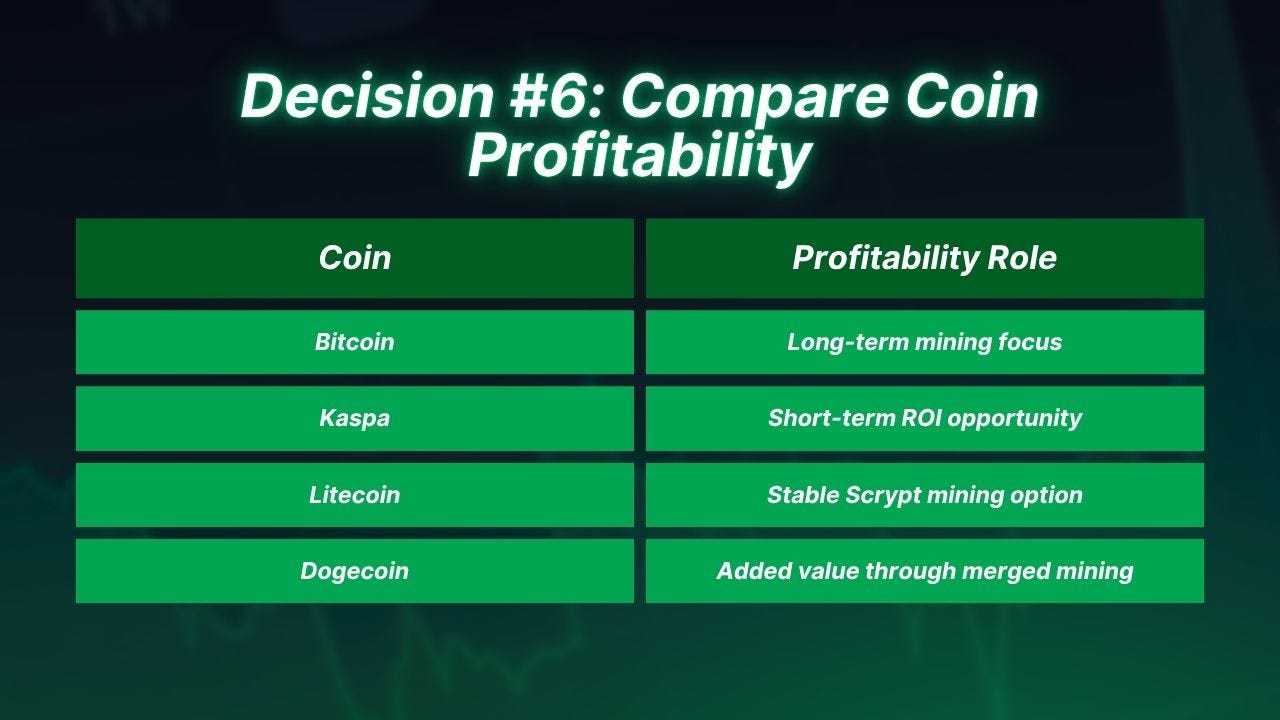
For example, miners using Scrypt ASICs may benefit from Litecoin and Dogecoin merged mining, while some Kaspa miners may focus on shorter ROI windows. The best choice depends on hardware, electricity cost, and current market conditions.
Check coin profitability here: https://asicprofit.com/coins
Daily Mining Decision Checklist
Before making any mining decision today, review these points:
- Check current electricity cost
- Compare ASIC efficiency
- Review Bitcoin price and difficulty
- Monitor miner uptime and temperature
- Calculate expected ROI
- Compare coin profitability
- Avoid decisions based only on hype
This checklist can help miners stay disciplined and avoid preventable losses.
Final Thoughts
Smarter mining decisions start with better data. In today’s ASIC mining market, profitability depends on more than hash rate. Electricity cost, miner efficiency, difficulty, uptime, cooling, coin selection, and ROI all matter.
The miners who succeed are usually the ones who understand their numbers before making a move.
Before buying hardware, switching coins, or scaling your operation, use AsicProfit to compare miners, calculate costs, and estimate ROI.
Calculate your ROI now at https://asicprofit.com
#AsicProfit #BitcoinMining #ASICMining #Asicminer
Stay Connected
🎥 YouTube