
Understanding ASIC mining profitability can feel complicated at first. Hashrate, power consumption, electricity costs, difficulty, fees — all of it moves constantly.
That’s why many beginners rely on rough estimates or seller claims, often leading to poor ROI decisions.
In this guide, we’ll break down exactly how ASIC mining profitability is calculated, step by step, and show how tools like ASICProfit simplify the process with real-time data.
Why Mining Profitability Isn’t Just “Coins Mined”
ASIC mining profitability is not fixed. It changes daily based on:
- Network difficulty
- Coin price
- Electricity cost
- Miner efficiency
- Pool fees
A miner that looks profitable today may look very different next month. That’s why understanding the calculation matters.
Step 1: Hashrate — Your Mining Power
Hashrate measures how fast your ASIC can perform cryptographic calculations.
Examples:
- Bitcoin miners: TH/s (terahashes per second)
- Kaspa, Aleo: GH/s or MH/s
Higher hashrate means:
- More chances to earn block rewards
- Higher potential output
But hashrate alone does not equal profit.
Step 2: Power Consumption (Watts)
Every ASIC consumes electricity, measured in watts (W).
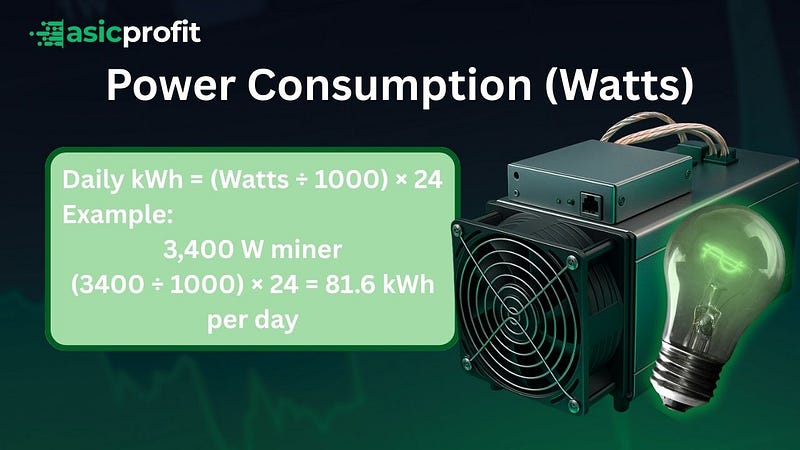
To understand daily energy use, convert watts into kilowatt-hours:
This step is critical because electricity is usually the largest operating cost.
Step 3: Electricity Cost (kWh Rate)
Next, multiply daily kWh by your electricity price.

Even small changes in kWh rates can dramatically impact profitability.
👉 This is why ASICProfit allows users to adjust electricity cost dynamically:
https://www.asicprofit.com/calculators
Step 4: Network Difficulty and Block Rewards
Mining rewards depend on how difficult the network is.
As difficulty increases:
- Each miner earns fewer coins for the same hashrate
- Older or inefficient miners are pushed out
Difficulty is constantly changing, which is why static spreadsheets fail.
ASICProfit pulls live difficulty and reward data, keeping estimates realistic instead of outdated.
Step 5: Pool Fees and Operational Costs
Most miners use pools, which charge fees (usually 1–3%).
Net revenue = Gross mining revenue − pool fees − electricity
Some setups may also include:
- Hosting fees
- Maintenance costs
- Cooling overhead
ASICProfit accounts for these variables so users see net profit, not marketing numbers.
Step 6: Net Daily Profit
Once all inputs are calculated:
Formula:
Net Daily Profit = Mining Revenue − Electricity − Fees
This is the number that actually matters — not coins mined, not hashrate alone.
👉 View live net profitability by miner:
https://www.asicprofit.com/miners
Step 7: ROI (Return on Investment)
ROI tells you how long it takes to recover your hardware cost.
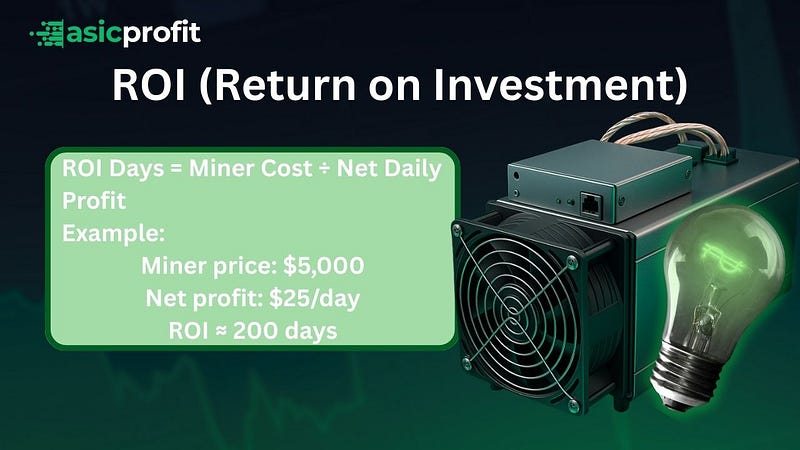
ASICProfit automatically calculates ROI using real-time profit data, not assumptions.
Why ASICProfit Is Built for Beginners
ASICProfit removes guesswork by:
- Using live coin prices and difficulty
- Normalizing electricity costs
- Showing real net profit
- Updating data frequently
Instead of learning the hard way, beginners can simulate outcomes before buying hardware.
Common Beginner Mistakes This Guide Helps Avoid
- Buying miners based only on hashrate
- Ignoring electricity sensitivity
- Using outdated profitability videos
- Trusting seller ROI claims
A proper calculation prevents costly mistakes.
Conclusion
ASIC mining profitability isn’t magic — it’s math.
Once you understand:
- Hashrate
- Power consumption
- Electricity cost
- Difficulty
- Fees
you can make confident, data-driven decisions.
Tools like ASICProfit exist to make these calculations transparent, realistic, and accessible — especially for beginners.
👉 Start calculating mining profitability the right way:
https://www.asicprofit.com/
Stay Connected
🎥 YouTube