
When choosing an ASIC miner, many miners instinctively focus on one number: hashrate.
Higher hashrate feels like higher profit — but in real-world mining, that assumption often leads to disappointing results.
So what actually matters more for mining profit: electricity cost or hashrate?
In this guide, we’ll break down the data-backed reality, compare real scenarios, and show how AsicProfit calculators help miners avoid costly mistakes.
👉 Analyze mining profitability here:
https://www.asicprofit.com/
Understanding the Two Core Variables
⚡ Electricity Cost
Electricity cost (measured in $/kWh) determines how much you pay to keep your miner running 24/7.
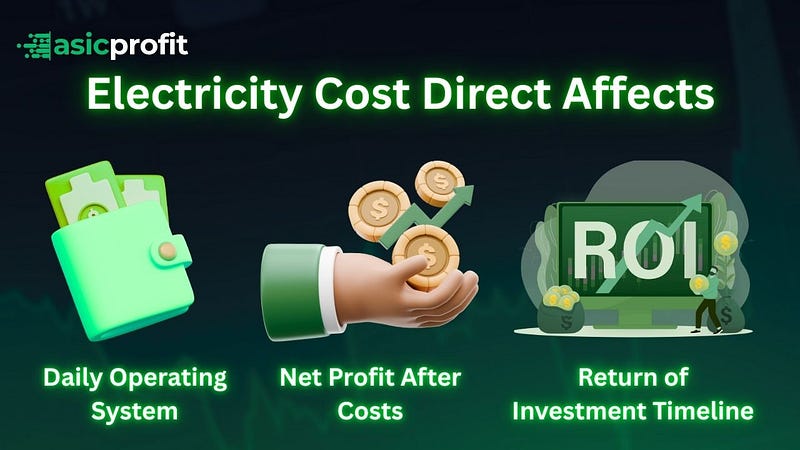
Electricity is the largest recurring cost in mining.
⚙️ Hashrate
Hashrate measures how fast a miner performs calculations.
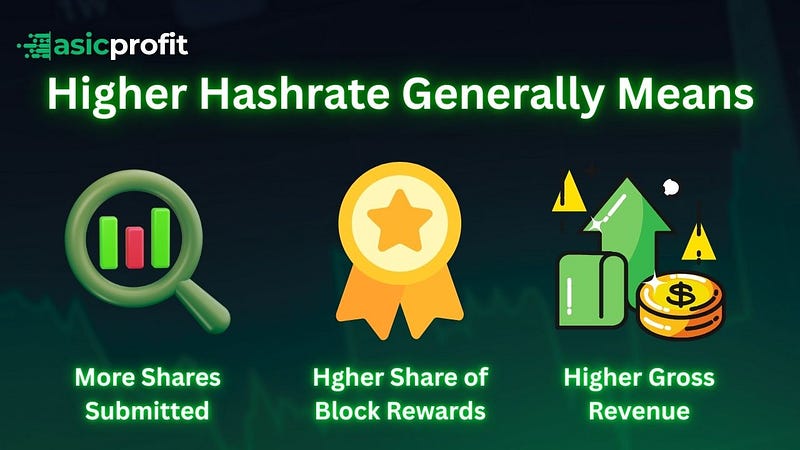
But gross revenue is not profit.
The Key Difference: Revenue vs Profit
This is where many miners go wrong.
- Hashrate drives revenue
- Electricity cost determines profit
A high-hashrate miner with poor efficiency or expensive electricity can earn more coins but still lose money.
Profit is what remains after electricity is paid.
Data-Backed Example: Same Hashrate, Different Electricity Cost
Let’s look at a simplified comparison using AsicProfit-style calculations.
Miner specs (example):
- Hashrate: High
- Power consumption: 3,500 W
- Runtime: 24 hours/day
🔹 Scenario A: $0.05/kWh
- Daily power use: 84 kWh
- Electricity cost: ~$4.20/day
- Net profit: Strong
🔹 Scenario B: $0.15/kWh
- Electricity cost: ~$12.60/day
- Net profit: Significantly reduced or negative
Same hashrate. Completely different outcome.
👉 Test electricity scenarios yourself:
https://www.asicprofit.com/calculators
Efficiency Connects Hashrate and Electricity
Efficiency (measured as J/TH or J/MH) tells you how much power is required to produce each unit of hashrate.
This is the missing link between hashrate and electricity cost.
- Lower J/TH = better efficiency
- Better efficiency = lower electricity cost per hash
Efficient miners survive longer as difficulty increases and margins tighten.
High Hashrate Can Be a Trap
New miners often assume:
“More hashrate always means more profit.”
In reality:
- High-hashrate miners usually consume more power
- Poor efficiency amplifies electricity costs
- Profitability drops quickly at higher kWh rates
This is why many older, high-power ASICs become unprofitable first — even if their hashrate looks impressive on paper.
Electricity Cost Sets the Profit Ceiling
Hashrate can increase revenue, but electricity cost sets the maximum possible profit.
If your electricity rate is too high:
- Even the most powerful miner may struggle
- ROI stretches into years
- Risk increases significantly
This is why professional miners prioritize:
- Low electricity regions
- Hosting facilities
- Industrial power contracts
Hosting vs Home Mining: Where the Difference Shows
Home miners often pay:
- $0.10–$0.20/kWh
Hosting facilities may offer:
- $0.04–$0.07/kWh
That difference alone can:
- Double net profit
- Cut ROI by months
- Keep miners profitable longer
Using AsicProfit, miners can instantly compare home vs hosting profitability using the same hardware.
👉 Compare scenarios here:
https://www.asicprofit.com/miners
What the Data Shows (Clear Conclusion)
Based on real profitability data:
✔ Hashrate matters for earning potential
✔ Electricity cost matters more for actual profit
✔ Efficiency determines who stays profitable long-term
In tight-margin environments, electricity cost almost always outweighs raw hashrate.
How AsicProfit Helps You Get This Right
AsicProfit is designed to prevent hashrate-only decisions.
With AsicProfit, you can:
- Adjust electricity costs instantly
- Compare miners by net profit
- Rank ASICs by efficiency
- Identify break-even kWh rates
- Avoid unprofitable hardware
Instead of guessing, you make decisions backed by live data.
👉 Start mining smarter here:
https://www.asicprofit.com/
Conclusion
If you must choose one:
💡 Electricity cost matters more than hashrate for mining profit.
Hashrate creates opportunity — electricity cost decides whether that opportunity becomes profit or loss.
The most successful miners aren’t chasing the biggest hashrate — they’re optimizing efficiency, power cost, and long-term sustainability.
🔗 Stay Connected
🎥 YouTube