ASICProfit: Hidden Energy Costs in Crypto Mining
AsicProfit breaks down the hidden energy costs miners ignore, including cooling, PSU losses, and other factors affecting profitability..

When most miners calculate profitability, they focus on only one number: the electricity rate per kilowatt-hour (kWh).
For example, a miner might assume that running a machine at $0.08 per kWh will produce a predictable daily profit. However, experienced operators know that the actual energy cost of mining is often higher than what basic calculations show.
There are several hidden energy costs that many miners overlook. These costs can quietly reduce profitability and lead to inaccurate ROI expectations.
Understanding these hidden expenses helps miners plan better infrastructure, make smarter hardware choices, and use tools like the ASICProfit calculators to estimate more realistic mining returns.
In this guide, we’ll break down the most common hidden energy costs and explain how they affect real mining profitability.
ASIC miners typically list a rated power consumption. For example, a miner might advertise 3200W power usage.
However, real-world power usage often varies depending on:
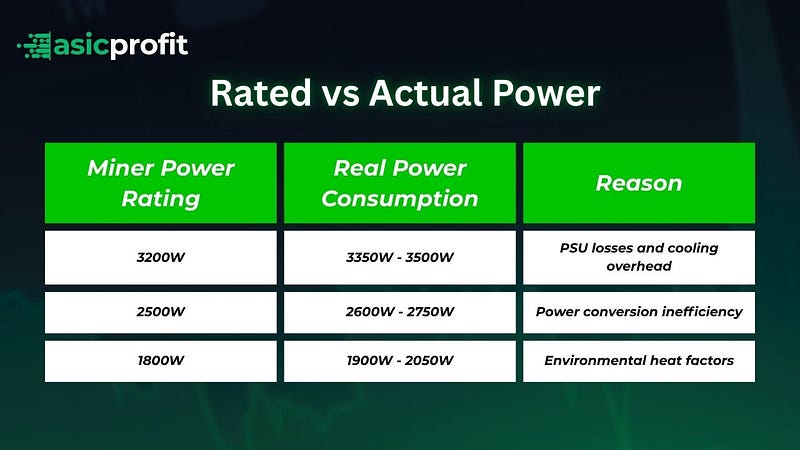
Even a 100W difference running 24 hours a day can add noticeable energy costs over time.
Many mining profitability calculations only include the power consumed by the ASIC miner itself. However, cooling infrastructure also consumes electricity.
This includes:
In warmer climates or poorly ventilated rooms, cooling can become a significant part of energy consumption.
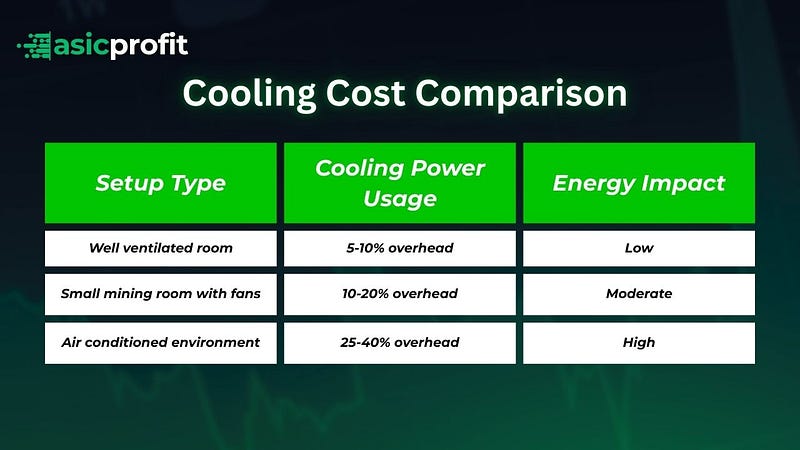
For large mining operations, cooling can account for a significant portion of total energy costs.
Another hidden factor is power supply unit (PSU) efficiency.
Electricity from the wall must be converted by the PSU before it reaches the ASIC chips. During this conversion, some energy is lost as heat.
Most ASIC power supplies operate at around 90–95% efficiency.
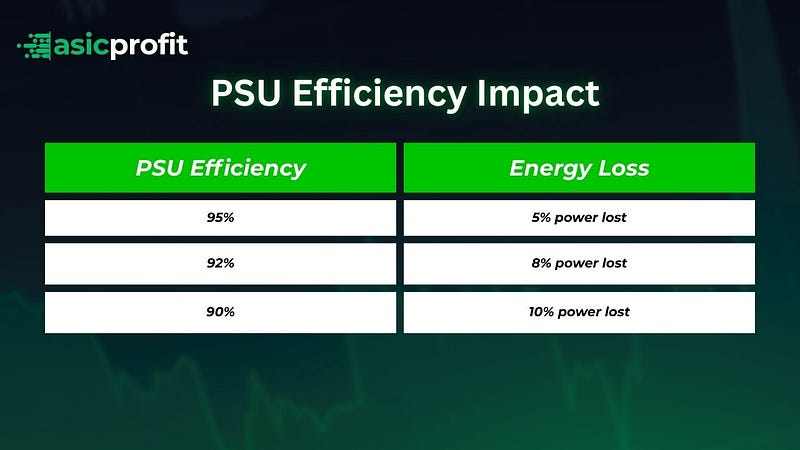
This means that if a miner needs 3000W of power, the wall consumption could actually be closer to 3300W.
Temperature plays a major role in mining efficiency.
When ASIC miners run in hotter environments:
Higher temperatures force the system to work harder to maintain stable performance.
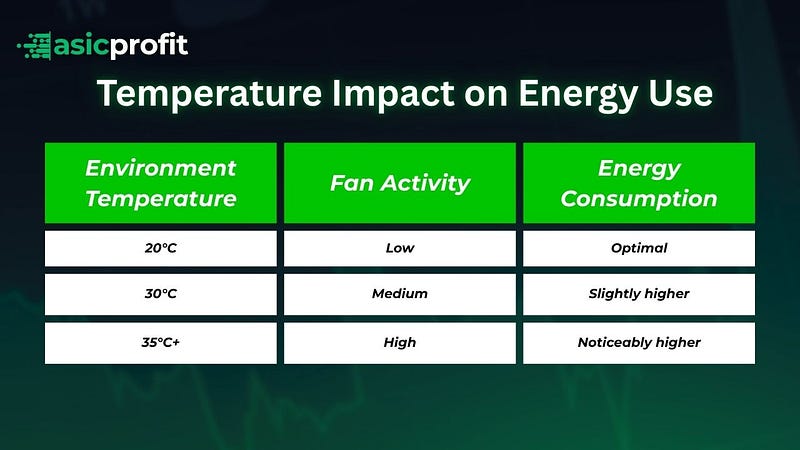
Maintaining proper airflow and ventilation can reduce these hidden energy costs.
Another overlooked factor is energy consumed during unstable operation or downtime events.
Mining systems may waste power during:
Even short interruptions can reduce profitability over time.

Stable infrastructure and monitoring tools help minimize these losses.
When combining all hidden energy factors, the total energy consumption often becomes higher than expected.
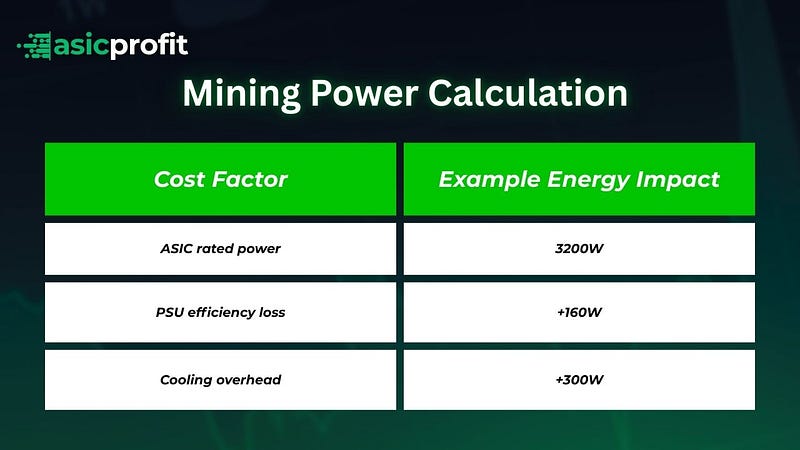
Total real consumption: ~3760W
This difference can significantly affect mining ROI calculations.
To calculate more realistic mining profitability, miners should include:
Using profitability tools like the ASICProfit mining calculators allows miners to estimate returns based on real operational conditions.
Miners can reduce these costs by improving infrastructure and monitoring power efficiency.
✔ Improve airflow and ventilation
✔ Keep mining environments cool and stable
✔ Use efficient power supplies
✔ Monitor real wall power consumption
✔ Use profitability calculators regularly
These steps help miners maintain stable operations and improve long-term profitability.
Electricity costs remain the largest expense in cryptocurrency mining. However, the number shown in a simple kWh calculation rarely tells the full story.
Cooling systems, power supply losses, temperature conditions, and downtime can all increase the true energy cost of mining.
By understanding these hidden factors, miners can make better infrastructure decisions and calculate profitability more accurately.
Tools such as the ASICProfit mining calculators help miners evaluate these costs and plan more efficient mining operations.
Mining success is not just about powerful hardware. It is about managing the entire energy ecosystem behind the miner.
🎥 YouTube