AsicProfit: Latest Crypto Mining Market Update
Discover the latest Bitcoin mining updates with AsicProfit. Learn how lower difficulty, hashrate changes, and efficiency are shaping miner profitability today.

The Bitcoin mining market has entered another interesting phase.
Over the past few weeks, miners have seen one of the largest downward difficulty adjustments of 2026 after network hashrate declined and mining profitability came under pressure. While lower difficulty may sound like good news, the full picture is much more complex.
For ASIC miners, profitability is still being shaped by electricity costs, hardware efficiency, Bitcoin price, and operating expenses. A lower difficulty adjustment may improve rewards, but it does not automatically guarantee higher profits.
This latest market update looks at the biggest developments affecting miners today and what they could mean for your mining strategy.
At AsicProfit, miners can compare ASIC hardware, estimate electricity costs, and calculate ROI before making investment decisions.
One of the biggest mining stories this month is Bitcoin’s 10.09% difficulty reduction, the second-largest downward adjustment of 2026. The adjustment followed a noticeable decline in network hashrate as some less-efficient miners shut down amid lower profitability. Difficulty fell from 138.96 trillion to 124.93 trillion, giving active miners slightly better odds of finding blocks.
A lower difficulty generally means miners can earn a slightly larger share of block rewards using the same amount of computing power.
However, miners should remember that this advantage may only last until more hashrate returns to the network.
A lower difficulty adjustment benefits efficient miners the most.
Modern ASIC miners can take advantage of reduced competition while maintaining lower operating costs. Older hardware may also receive temporary relief, but machines with poor efficiency still face challenges if electricity costs remain high.
Today’s market is rewarding miners who can keep operating costs under control rather than simply adding more machines.
Although all of these miners remain competitive, models with lower J/TH ratings are generally better positioned when mining conditions become more challenging.
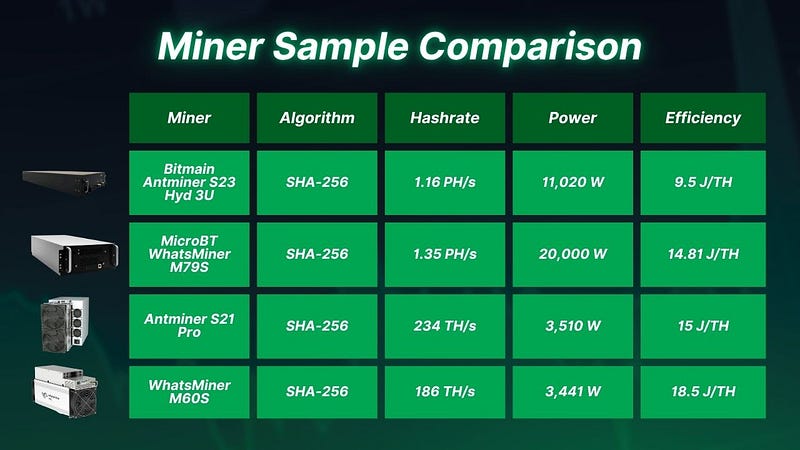
Compare ASIC miners here:
Even with favorable network conditions, electricity remains the largest operating expense for most ASIC miners.
Consider two miners running the same Antminer S21 Pro (234 TH/s, 3,510 W) under different electricity rates
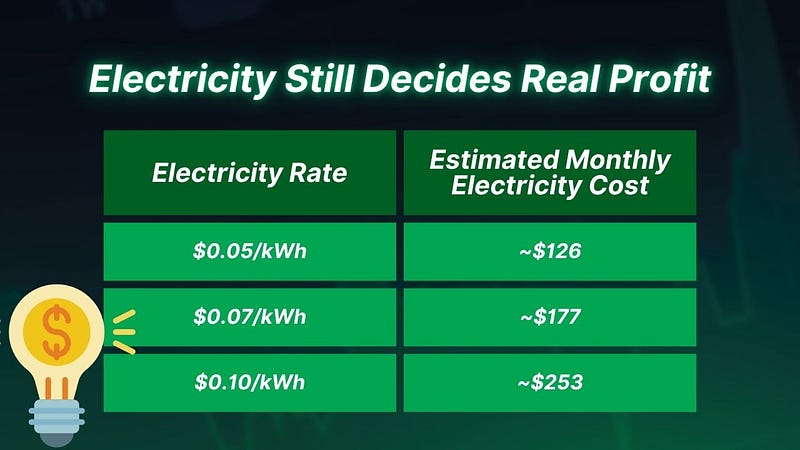
While the miner’s hashrate stays exactly the same, the monthly operating cost can nearly double depending on the electricity price. Over a full year, a miner paying $0.10/kWh could spend more than $1,500 extra on electricity compared to someone paying $0.05/kWh.
This illustrates why professional miners often prioritize lower power rates before purchasing new hardware. Improving electricity costs can have a greater impact on profitability than simply upgrading to a faster ASIC.
Calculate your expected operating costs and ROI using AsicProfit:
https://asicprofit.com/calculator
While the difficulty adjustment provides some relief, hashprice — the revenue earned per unit of hashpower — remains close to breakeven levels for many operators. Recent estimates place hashprice around $29–33 per PH/s/day, meaning inefficient hardware or expensive electricity can quickly erase profits.
This explains why many mining companies continue focusing on fleet upgrades instead of simply expanding the number of machines they operate.
Rather than reacting to Bitcoin price alone, experienced miners are paying attention to several key indicators:
These metrics often provide a much clearer picture of future profitability than market price by itself.
Today’s mining market is rewarding efficient operations.
As competition increases, operators with modern ASIC hardware, low electricity costs, and reliable infrastructure are in a much stronger position than those relying on older equipment.
Efficiency is no longer simply a hardware specification — it has become a business strategy.
Mining farms that invest in efficient machines and continuously monitor profitability are generally better prepared to handle future market changes.
The latest Bitcoin mining update shows that even positive developments like a lower difficulty adjustment should be viewed in context.
Profitability still depends on much more than network difficulty. Electricity costs, ASIC efficiency, operating expenses, and ROI planning remain the biggest drivers of long-term success.
Before purchasing new hardware or expanding your mining operation, use AsicProfit to compare ASIC miners, calculate electricity costs, and estimate profitability using current market data.
Calculate your ROI now: https://asicprofit.com
#AsicProfit #BitcoinMining #ASICMining #Asicminer
🎥 YouTube