AsicProfit: Understanding Hashprice for ASIC Miners
Learn what hashprice is, why it matters, and how it affects ASIC mining profitability. Discover how AsicProfit helps miners make smarter ROI decisions.

When most people talk about Bitcoin mining, they usually focus on Bitcoin’s price, mining difficulty, or the latest ASIC hardware. While those factors are important, there is another metric that professional miners monitor every day: hashprice.
Hashprice has become one of the most useful indicators for understanding mining profitability. It reflects how much revenue a miner can expect to earn for a given amount of hashpower under current network conditions. Because it combines several key market factors into a single value, hashprice provides a clearer picture of mining economics than Bitcoin price alone.
If you’re planning to buy an ASIC miner or optimize an existing mining operation, understanding hashprice can help you make better investment decisions.
At AsicProfit, miners can compare ASIC hardware, estimate electricity costs, and calculate profitability using current mining data.
Hashprice is the estimated daily revenue generated for a specific amount of mining power, usually measured as dollars per petahash per day ($/PH/day).
Unlike Bitcoin’s market price, hashprice reflects the actual earning potential of miners by taking multiple variables into account.
These include:
When any of these factors change, hashprice changes as well.
A rising hashprice generally indicates improving mining conditions, while a falling hashprice signals tighter profit margins.
Many new miners assume that a higher Bitcoin price automatically means higher mining profits.
That isn’t always true.
If Bitcoin rises by 10% but mining difficulty increases by 15%, miners may actually earn less Bitcoin for the same amount of computing power.
Hashprice captures both revenue and competition, making it a more practical indicator of actual mining performance.
This is why many professional mining companies monitor hashprice alongside Bitcoin price instead of relying on market charts alone.
Hashprice moves whenever the economics of Bitcoin mining change.
Some of the biggest influences include:
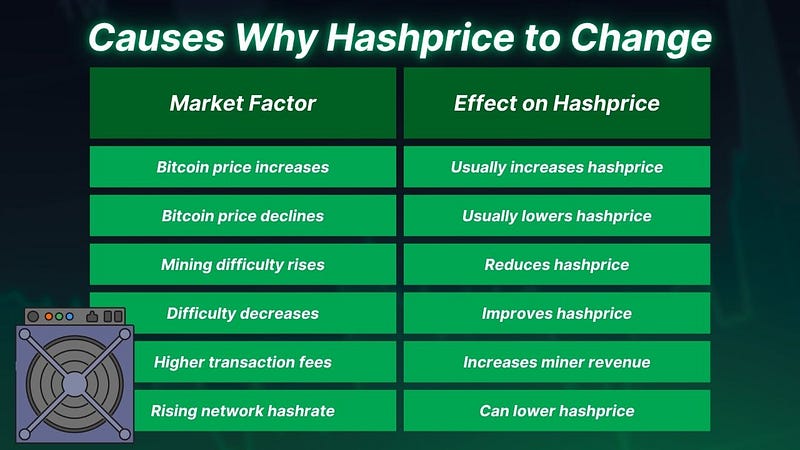
Rather than watching one metric in isolation, experienced miners look at how these factors interact throughout the week.
Different ASIC miners respond differently to changes in hashprice because of their efficiency and power consumption.
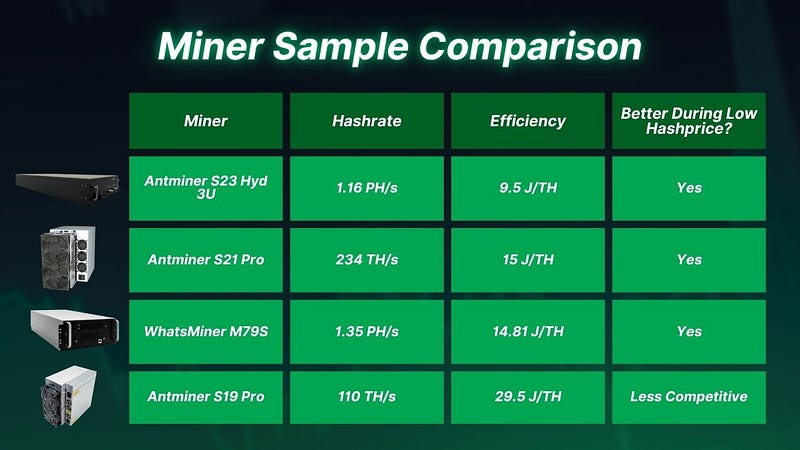
Efficient miners generally remain profitable for longer when hashprice declines because they consume less electricity for every unit of hashpower they produce.
Compare ASIC miners here:
Hashprice tells you how much revenue your miner may generate, but it does not include your operating expenses.
Electricity remains the largest ongoing cost for most ASIC miners.
Even if hashprice improves, expensive electricity can still reduce or eliminate mining profits.
This is why miners should evaluate both revenue and operating costs before calculating ROI.
Calculate your mining costs here:
https://asicprofit.com/calculator
Professional miners use hashprice to make daily operational decisions.
Some of the most common uses include:
Instead of reacting only to Bitcoin price movements, miners use hashprice to understand whether their operation remains competitive.
Hashprice is a useful metric, but it should never be viewed by itself.
Some common mistakes include:
Mining profitability is always influenced by multiple variables.
Hashprice provides an excellent snapshot of current conditions, but miners should combine it with ROI calculations and operating costs before making investment decisions.
As Bitcoin mining becomes more competitive, margins continue to tighten.
Today’s miners cannot rely on hashrate alone.
Instead, successful operators monitor:
Together, these metrics provide a much clearer understanding of long-term profitability.
Hashprice has become one of the most valuable metrics in Bitcoin mining because it connects market conditions with real mining revenue.
While Bitcoin price often dominates the headlines, experienced miners understand that profitability depends on much more than price alone.
By tracking hashprice alongside electricity costs, ASIC efficiency, and ROI, miners can make smarter investment decisions and better prepare for changing market conditions.
Before purchasing new hardware or expanding your mining operation, use AsicProfit to compare ASIC miners, estimate electricity costs, and calculate profitability using current mining data.
Calculate your ROI now: https://asicprofit.com
#AsicProfit #BitcoinMining #ASICMining #Asicminer
🎥 YouTube