























 FB
 BC2
 BCH
 BSV
 DGB
 VTC
 GRS
 XEC
 ETHW
 HNS
 LKY
 DINGO
 LBC
 SC
 RXD
How to Use AsicProfit to Simulate ROI Before Buying a Miner
A worked payback example for a real ASIC miner with November 2026 numbers: power price, pool fee, uptime, a difficulty stress test, and three miners compared.

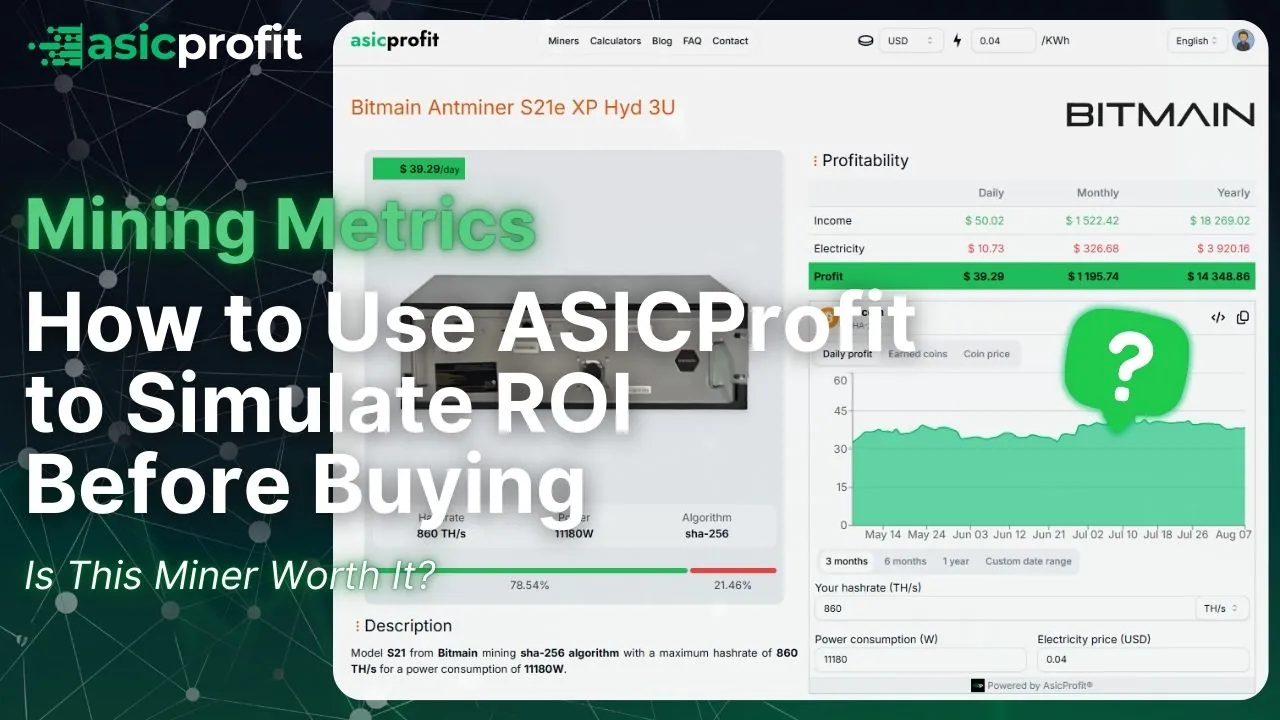
To estimate payback, divide the miner's price by its daily profit after power, pool fee and downtime, then test what happens if revenue falls. On 4 Nov 2026 a new Antminer S21 XP (270 TH/s) at the median price of $3,080 pays back in about 834 days at $0.06/kWh with a 2% pool fee and 97% uptime, and in about 1,094 days if revenue drops another 10%. A miner page on AsicProfit does this sum for every listed offer at your own power price.
How do you work out a miner's payback before buying?
Payback in days = price paid ÷ profit per day. Profit per day = revenue − power cost − pool fee − lost revenue from downtime. The sum is simple; the hard part is using today's numbers for revenue and a realistic price, and then testing what happens when revenue falls. The steps below do this for a real machine with numbers from 4 November 2026.
Step 1: What does the miner earn per day today?
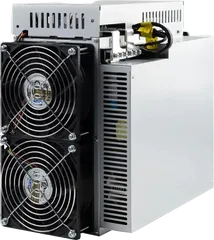
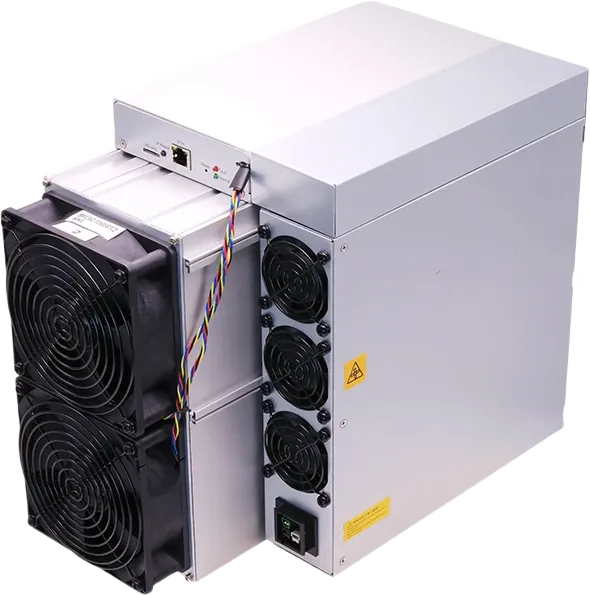
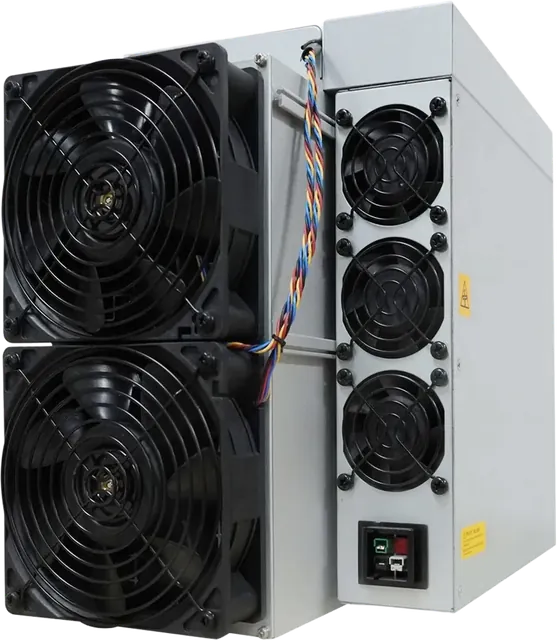
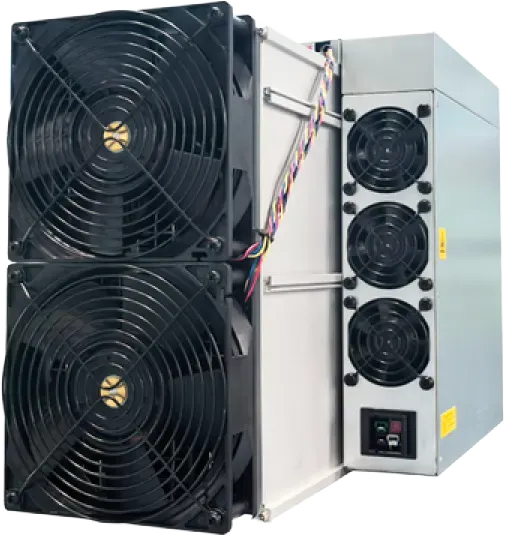
Start with the miner's revenue before costs, at today's difficulty and coin price. The example is the Bitmain Antminer S21 XP: 270 TH/s, 3,645 W, 13.5 J/TH (manufacturer spec). On 4 Nov 2026 it earns $9.24 a day mining Bitcoin, at a difficulty of 148.36 T and a bitcoin price of $80,344 (AsicProfit network data). That figure is on the miner's page and is recalculated as network data updates.
Step 2: What will the power cost you?
Power cost per day = power in kW × 24 h × your price per kWh. For the S21 XP: 3.645 kW × 24 h = 87.48 kWh a day. At $0.06/kWh that is $5.25 a day; at $0.04/kWh it is $3.50.
Use the price you will actually pay, including any hosting markup, not the lowest rate you have seen advertised. On a miner page on AsicProfit you can set your power price; every figure on the page, including each offer's payback, then follows it. For a hosted machine, switch the page to hosted and enter the monthly hosting fee.
Step 3: Add the pool fee and downtime
Pool fees (often 1% to 2%) and downtime both cut revenue. With a 2% pool fee and 97% uptime, the S21 XP's revenue falls from $9.24 to $9.24 × 0.98 × 0.97 = $8.78 a day. Power falls slightly too, because a machine that is off uses none: $5.25 × 0.97 = $5.09. Profit is $8.78 − $5.09 = $3.69 a day. Both fields are on the miner page.
Step 4: Divide the price by the profit
Use the median seller price, not the cheapest offer. On 4 Nov 2026 AsicProfit lists 12 offers for a new Antminer S21 XP; the median is $3,080 (the cheapest is $1,916, the highest $7,075). The table shows how each cost changes payback at $0.06/kWh.
| Scenario | Profit ($/day) | Payback (days) |
|---|---|---|
| Revenue − power only | 3.99 | 772 |
| + 2% pool fee, 97% uptime | 3.69 | 834 |
| + revenue 10% lower (difficulty or price) | 2.81 | 1,094 |
| Same as row 1 at $0.04/kWh | 5.74 | 536 |
Step 5: Stress-test the result
Repeat the sum with revenue 10% to 20% lower. Bitcoin difficulty rose 11.8% between 3 Oct and 30 Oct 2026, so a 10% drop within a few weeks is not an extreme case. A payback that only works if nothing changes for two years is a bet on the bitcoin price, not a safe purchase. Also check the next halving date (see halving): each halving cuts the block reward in half.
Step 6: Compare several miners at your power price
A cheaper, less efficient miner can pay back faster than an expensive efficient one, or the reverse. Three Bitcoin miners compared on 4 Nov 2026 (median prices from AsicProfit offers, revenue from AsicProfit network data, no pool fee, 100% uptime):
| Miner | Efficiency (J/TH) | Median price ($) | Offers | Profit at $0.06/kWh ($/day) | Payback at $0.06/kWh (days) | Payback at $0.04/kWh (days) |
|---|---|---|---|---|---|---|
| Antminer S21j XP Hyd (495Th) | 12.0 | 6,160 | 23 | 8.39 | 735 | 548 |
| Antminer S21 XP (270Th) | 13.5 | 3,080 | 12 | 3.99 | 772 | 536 |
| Antminer S23 (318Th) | 11.0 | 8,402 | 18 | 5.85 | 1,435 | 1,115 |
The rows are sorted by payback at $0.06/kWh. The S23 is the most efficient of the three but has the longest payback, because its median price is much higher. The S21j XP Hyd is water-cooled: it needs a hydro setup or a hosting site that offers one, which adds cost the table does not show.
What does an ROI estimate not tell you?
An ROI estimate is not a forecast. It leaves out shipping, import tax and VAT, repairs, warranty terms, the machine's resale value and any change in the coin price or difficulty after today. It also assumes the seller delivers on time: a preorder that ships three months late loses three months of revenue. Check the seller's details before paying, especially if a price is far below the others.
Who should run these numbers?
Anyone buying a miner should, but it matters most for home miners at $0.08/kWh or more, where profit is thin, and for buyers comparing hosting sites, where the power price decides the result. Hosting rates by location are on hosting providers; every miner ranked by today's profit is in the miner ranking.
Updated 4 Nov 2026: rewritten as a worked example with November 2026 numbers, pool-fee, downtime and stress-test steps and a three-miner comparison table added.
Which miner pays off at your power price?
Compare the live profit of every ASIC miner, then buy from verified sellers or find hosting.
Keep reading
All articles →
The AsicProfit App: Free Mining Calculators and Miner Prices on Android and iPhone
AsicProfit now installs on your phone like an app: free, no app store, full screen, with every mining calculator, miner price and hosting rate one tap away.

How to Use ASICProfit for ASIC Mining
Learn how to use ASICProfit to compare ASIC miners, calculate profitability, track difficulty, evaluate hosting and make better mining decisions.

How to Use the ASICProfit Calculator
Learn how to use the ASICProfit calculator to estimate mining revenue, electricity costs, pool fees and profit across multiple time periods.