






















 FB
 BC2
 BCH
 BSV
 DGB
 VTC
 GRS
 XEC
 ETHW
 HNS
 LKY
 DINGO
 LBC
 SC
 RXD
Hosting or Home Mining? How to Choose by What You Want From It
Mine for profit, learn with a solo miner, or heat your home: the right place for a miner depends on why you mine. Budget, power, maintenance, warranty and uptime compared, with three calculators to run your own numbers.

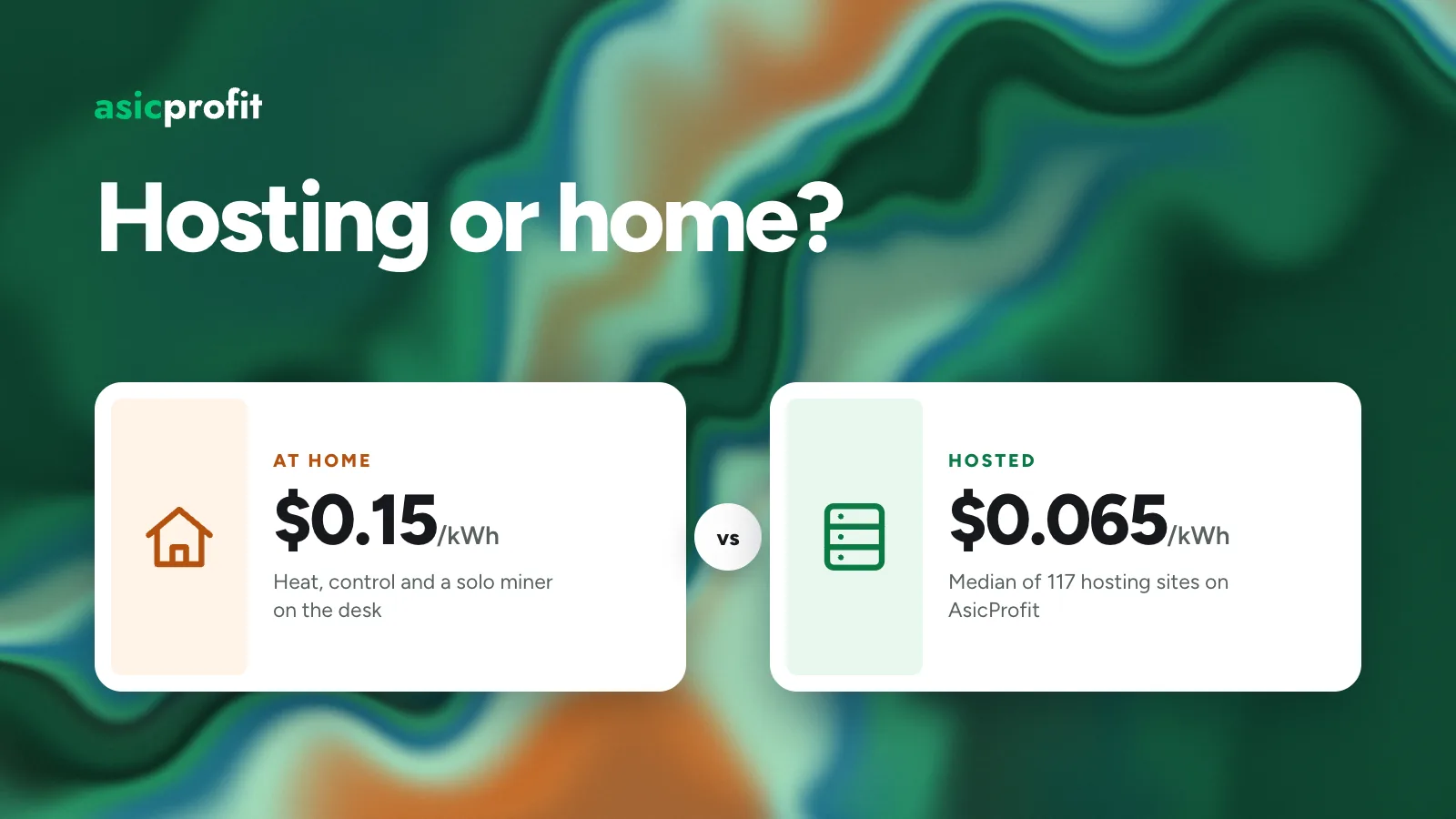
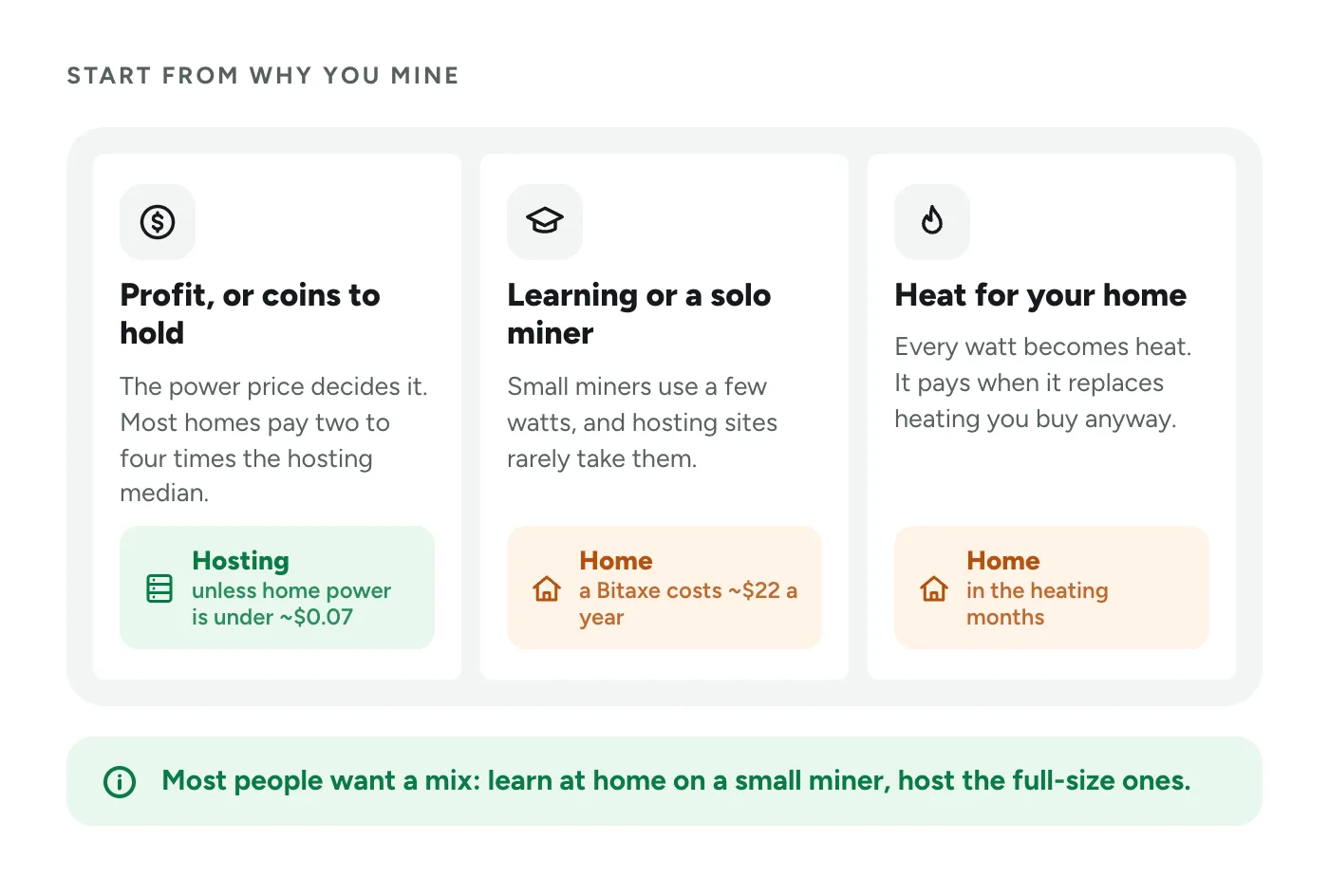
Where a miner should run depends on why you mine. For profit, hosting wins unless your home power costs under about $0.06 to $0.08/kWh: on 28 Nov 2026 the median of the 117 hosting sites with space on AsicProfit is $0.065/kWh and 24 charge $0.05 or less, while most homes pay $0.10 to $0.30. To learn, or to try for a block with a solo miner, home wins: small miners use a few watts and hosting sites rarely take them. For heat, home wins in the heating months, when the heat replaces heating you would pay for anyway. Hosting adds shipping, a minimum term and less control; home adds noise, wiring and your own time for repairs. The three calculators below run the numbers for your miner and your prices.
Should you host your miner or run it at home?
It depends on why you mine. If the goal is profit, a hosting site usually wins, because its power is cheaper than almost any home's. If the goal is to learn, or to try for a block with a small solo miner, home wins. If the goal is heat, home wins for the months you need heating. Most people want a mix, so the sections below take each goal in turn and then compare the costs that decide it: budget, electricity, maintenance, warranty and uptime.
Which is better if you mine for profit?
For profit, hosting is better unless your home electricity costs less than your miner's break-even price, which for today's best air-cooled miners is about $0.06 to $0.08/kWh. On 28 Nov 2026 the 117 hosting sites with space on AsicProfit charge a median of $0.065/kWh, the cheapest $0.0364, and 24 of them charge $0.05 or less. Most homes pay $0.10 to $0.30.
The break-even price is the most a miner can pay for power and still make money. It is the daily income divided by the power it uses in a day:
| Miner | Earns a day ($) | Break-even ($/kWh) | Lowest price ($) |
|---|---|---|---|
| Antminer S21 XP 270 TH/s, 3,645 W | 6.98 | 0.080 | 1,916 |
| Antminer S21 Pro 234 TH/s, 3,510 W | 6.05 | 0.072 | 1,685 |
| Antminer S21 200 TH/s, 3,500 W | 5.17 | 0.062 | 907 |
| Avalon Q 90 TH/s, 1,674 W | 2.33 | 0.058 | 1,310 |
| Antminer S19k Pro 120 TH/s, 2,760 W | 3.10 | 0.047 | 336 |
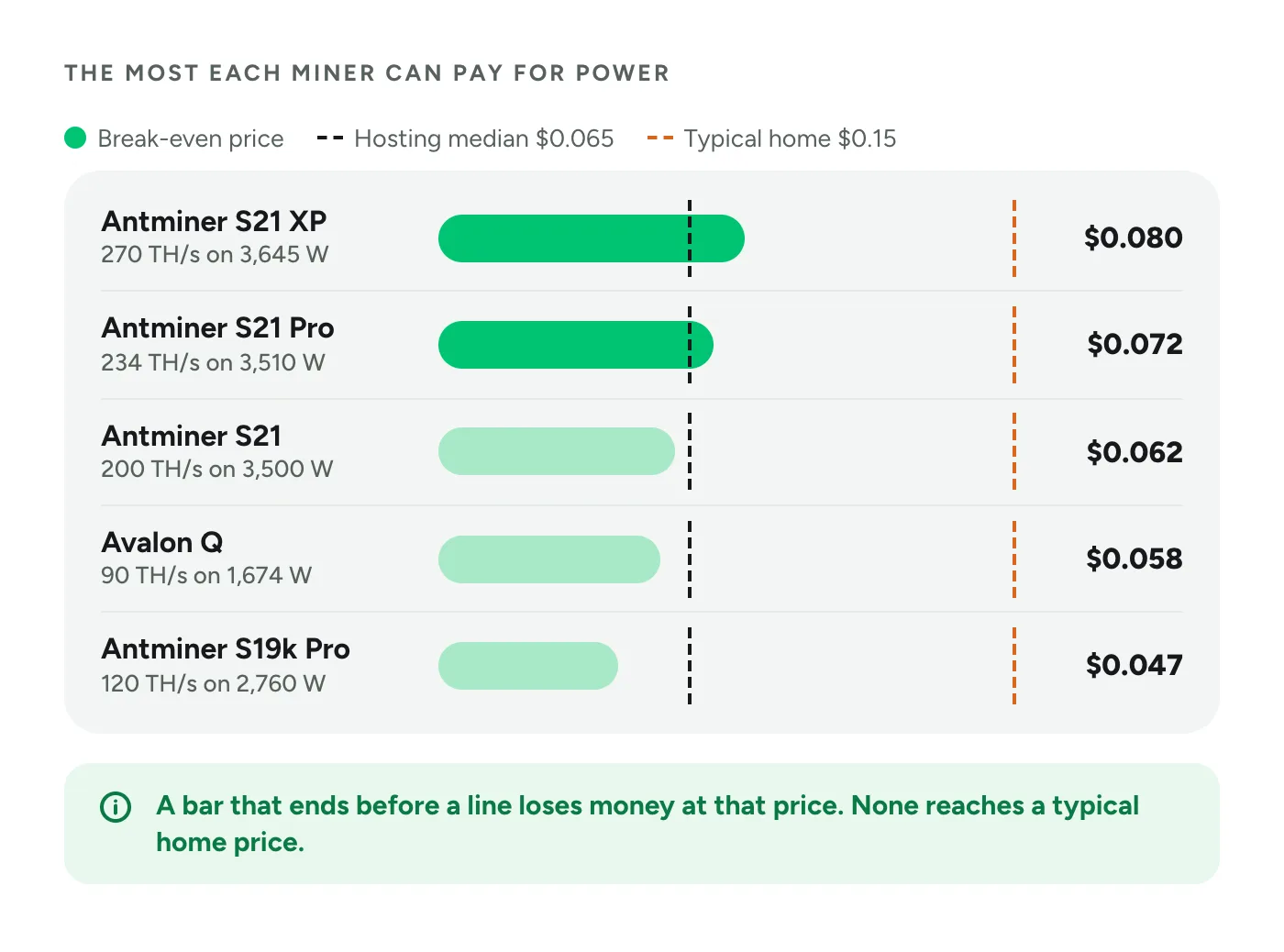
Two things follow. At home, at $0.15/kWh, none of these machines pays its power bill. And in hosting, the site you pick matters as much as the choice to host: at the median rate only the newest machines make money, while at the cheapest sites, around $0.04, all five do. Try your own miner and prices:
Turn on JavaScript to use this calculator.
If you mine to hold coins rather than sell them, the maths is the same. Paying more for power than the coins are worth buys coins at a higher price than the market sells them.
Which is better for learning or a solo miner?
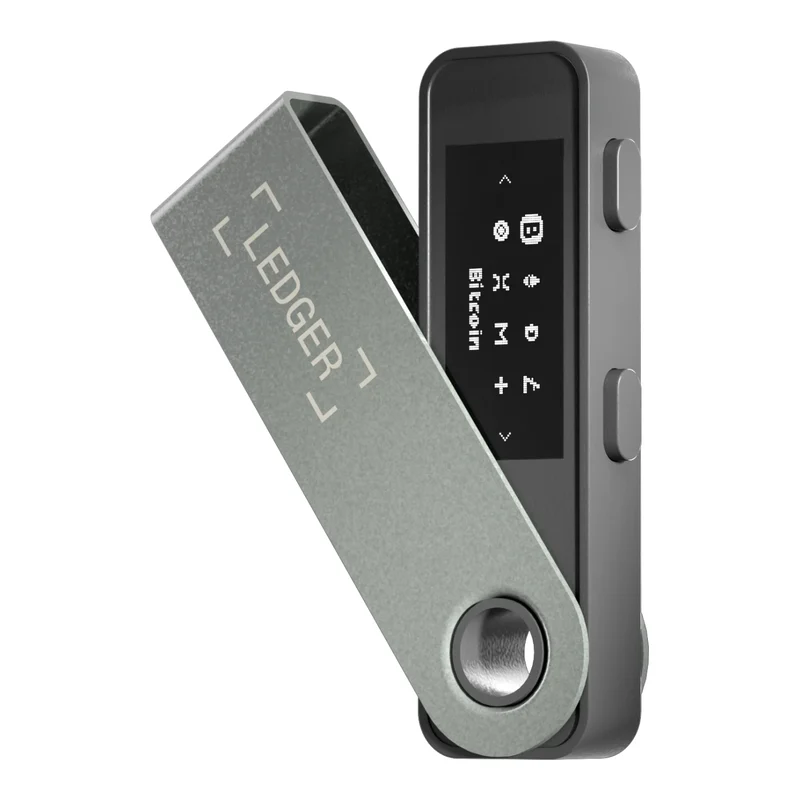
For learning or solo mining, home is better. A solo or lucky miner like a Bitaxe uses about 17 W, as much as a light bulb, so the power price hardly matters: about $22 a year at $0.15/kWh. Hosting sites are built for full-size machines and often ask for a minimum order, so a small miner rarely has a place there. And at home you can watch it, change its settings and learn from it, which is half the point.
Solo mining a full-size machine in a hosting site is possible, but the odds stay long. An Antminer S21 XP on its own had about a 1 in 74 chance of finding a block in a year on 27 Nov 2026. Check any setup in the solo mining odds calculator.
A good middle path: learn at home on a small miner first, then host full-size machines once you know what you want from them.
Which is better if you want the heat?
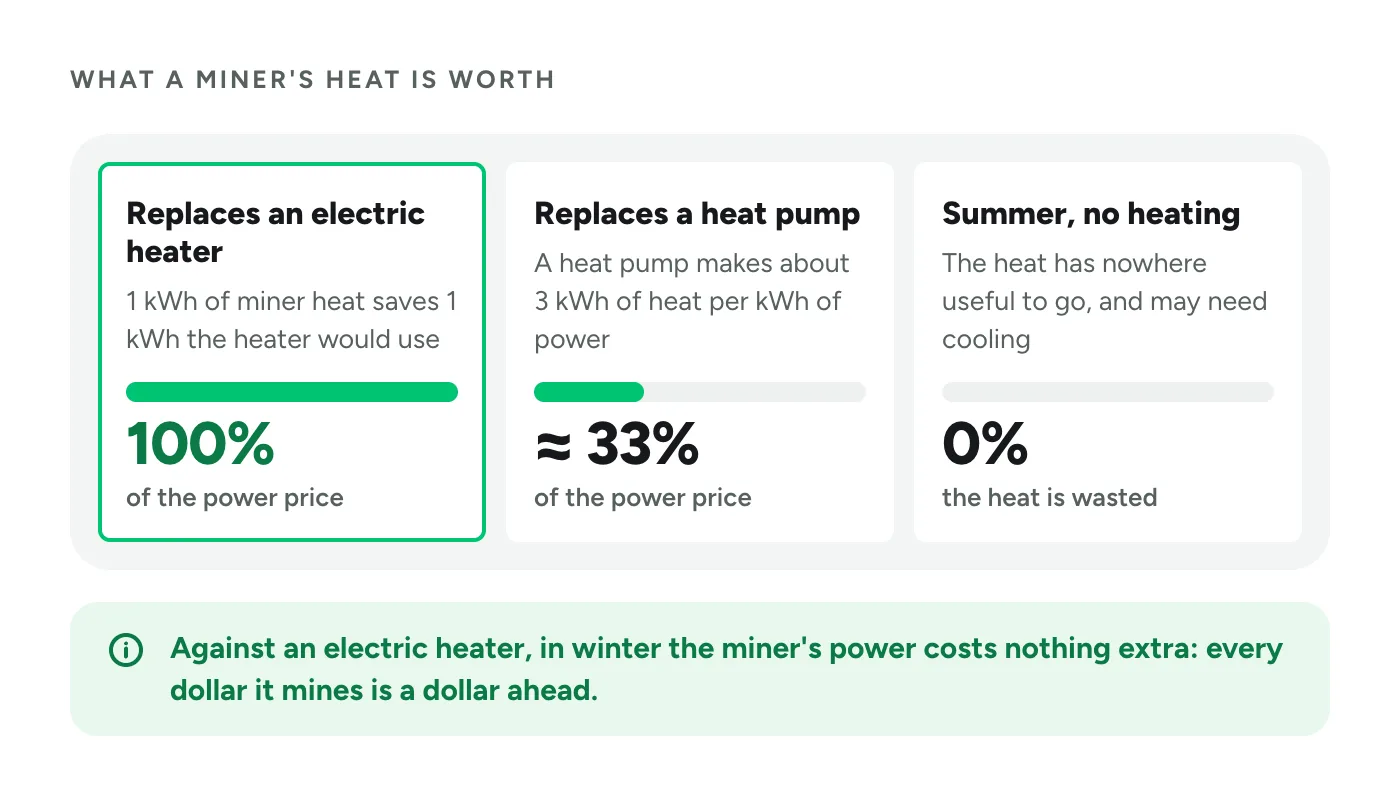
For heat, home is better, but only in the months you would heat anyway. A miner turns all of its power into heat, the same as an electric heater of the same wattage. When that heat replaces heating you would pay for, the miner's power is partly or fully paid back.
How much depends on what it replaces. Against an electric heater, the heat is worth the full power price, so in winter the miner's power costs you nothing extra. Against a heat pump, which makes about three units of heat per unit of power, the miner's heat is worth only about a third as much. Against gas, it depends on the gas price.
Turn on JavaScript to use this calculator.
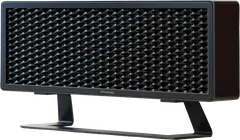
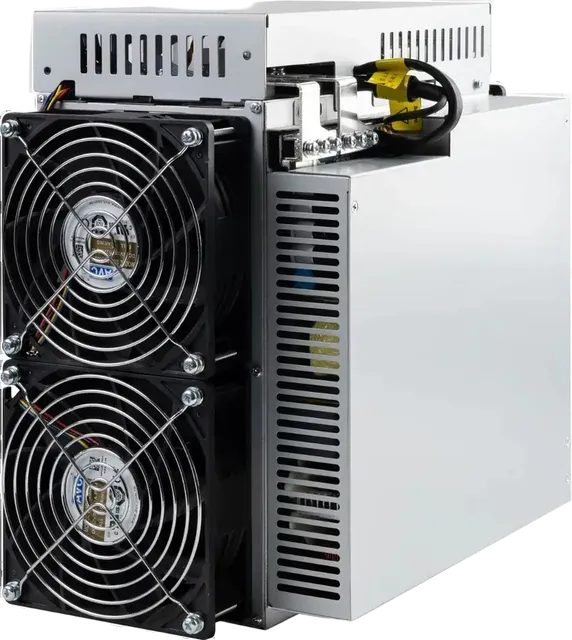
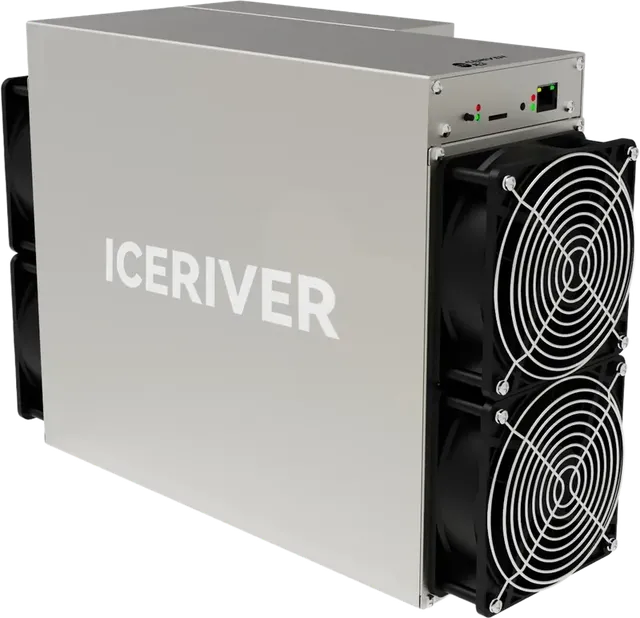
Quiet home miners are built for this. The Avalon Q (90 TH/s, 1,674 W) and the Avalon Mini 3 (37.5 TH/s, 800 W) are sold as home units, and Home & heaters lists the rest. A full-size air-cooled miner gives the same heat but is far too loud for a living room.
How do the costs compare?
The costs split into what you pay once and what you pay every month. Hosting moves most of the work to someone else and charges for it in the power price; home keeps the work and the control with you.
| Cost | At home | Hosted |
|---|---|---|
| Budget up front | The miner, plus wiring and noise control | The miner, plus shipping and setup |
| Electricity | Your home rate, often $0.10 to $0.30/kWh | The site's rate, median $0.065/kWh |
| Maintenance | You clean, fix and replace parts | The site's technicians, often included |
| Warranty | You ship the miner to the repair centre | The site often handles the claim |
| Uptime | Up to you: power cuts, internet, heat | Promised in the contract, 95 to 99% |
Budget
A full-size miner costs from a few hundred dollars used to a few thousand new: the S21 XP's lowest live price is $1,916, a used S19k Pro $336. At home, add a dedicated circuit: a 3,600 W miner needs its own 230 V line and sits at the limit of a standard 16 A socket. Hosting adds shipping and a setup fee instead, and some sites ask for a deposit or a minimum number of machines.
Electricity
Electricity is the biggest cost either way, and the gap between home and hosting is usually the whole decision. Over a year, an S21 XP uses about 31,900 kWh. At $0.15 that is about $4,790; at the $0.065 hosting median, about $2,080.
Maintenance
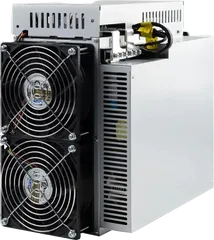
Air-cooled miners need their dust cleaned and their fans replaced, and a full-size one is as loud as a vacuum cleaner, around 75 dB. At home that is your job and your noise. A hosting site cleans, reboots and swaps parts on site, usually as part of the rate.
Warranty
A maker's warranty usually covers months, not years, and a claim means shipping the miner to a repair centre. From home that is your packing, your shipping and weeks without income. Many hosting sites handle claims for you, and some sell extended cover, from about $79 a year in one listing on AsicProfit. Read what the contract says before you ship.
Uptime
Uptime is the share of time the miner actually runs. Hosting contracts promise it: the sites on AsicProfit that state a figure promise 95 to 99.9%, most often 95, 98 or 99%. At home nobody promises anything, but a home with steady power and internet can do just as well. The real difference is repairs: on site a broken miner is often back in days, from home it can be weeks.
Turn on JavaScript to use this calculator.
When does running at home make sense?
Home makes sense when one of these is true:
- Your power is cheap: under your miner's break-even price, roughly $0.06 to $0.08/kWh for current machines, with nothing to share with a host.
- You want the heat: a quiet home miner in a room you heat anyway, through the cold months.
- You want to learn or try your luck: a small solo miner, where the power bill is a few dollars a year.
- You want full control: your own firmware, settings and pool, and the machine in sight.
When does hosting make sense?
Hosting makes sense when your goal is profit and your home power is not cheap, when you have more than one or two machines, or when noise and heat at home are not an option. It also suits anyone who doesn't want to repair miners themselves.
Pick the site by price first, then by terms: uptime promised in writing, what happens when a miner breaks, the minimum term, and how and when the rate can change. Compare them in AsicProfit's hosting directory, where every site shows its rate, country and terms.
FAQ
Is hosting cheaper than mining at home?
Usually, yes. On 28 Nov 2026 the median hosting rate on AsicProfit is $0.065/kWh, and most homes pay $0.10 to $0.30/kWh. Hosting adds shipping and setup costs, but over a year the lower power price outweighs them for a full-size miner.
What electricity price makes home mining profitable?
One below your miner's break-even price: its daily income divided by the power it uses in a day. On 28 Nov 2026 that is about $0.080/kWh for an Antminer S21 XP and $0.062 for an S21.
Can I host a Bitaxe or other solo miner?
Rarely. Hosting sites are built for full-size machines and often ask for a minimum order. A Bitaxe uses about 17 W, so running it at home costs only about $22 a year at $0.15/kWh.
Is a mining heater worth it?
In the heating months, if it replaces electric heating, yes: its power costs nothing extra and every dollar it mines is a dollar ahead. Against a heat pump or cheap gas the heat is worth less, and in summer it is wasted.
What uptime should a hosting contract promise?
At least 95%, and the sites on AsicProfit that state a figure promise 95 to 99.9%. Ask how the figure is measured, what you get back when it is missed, and how fast a broken miner is repaired.
Does hosting void my miner's warranty?
Not by itself. The warranty is between you and the maker or seller. Ask the hosting site how it handles claims and repairs, since it will be the one shipping the miner.
Which miner pays off at your power price?
Compare the live profit of every ASIC miner, then buy from verified sellers or find hosting.
Keep reading
All articles →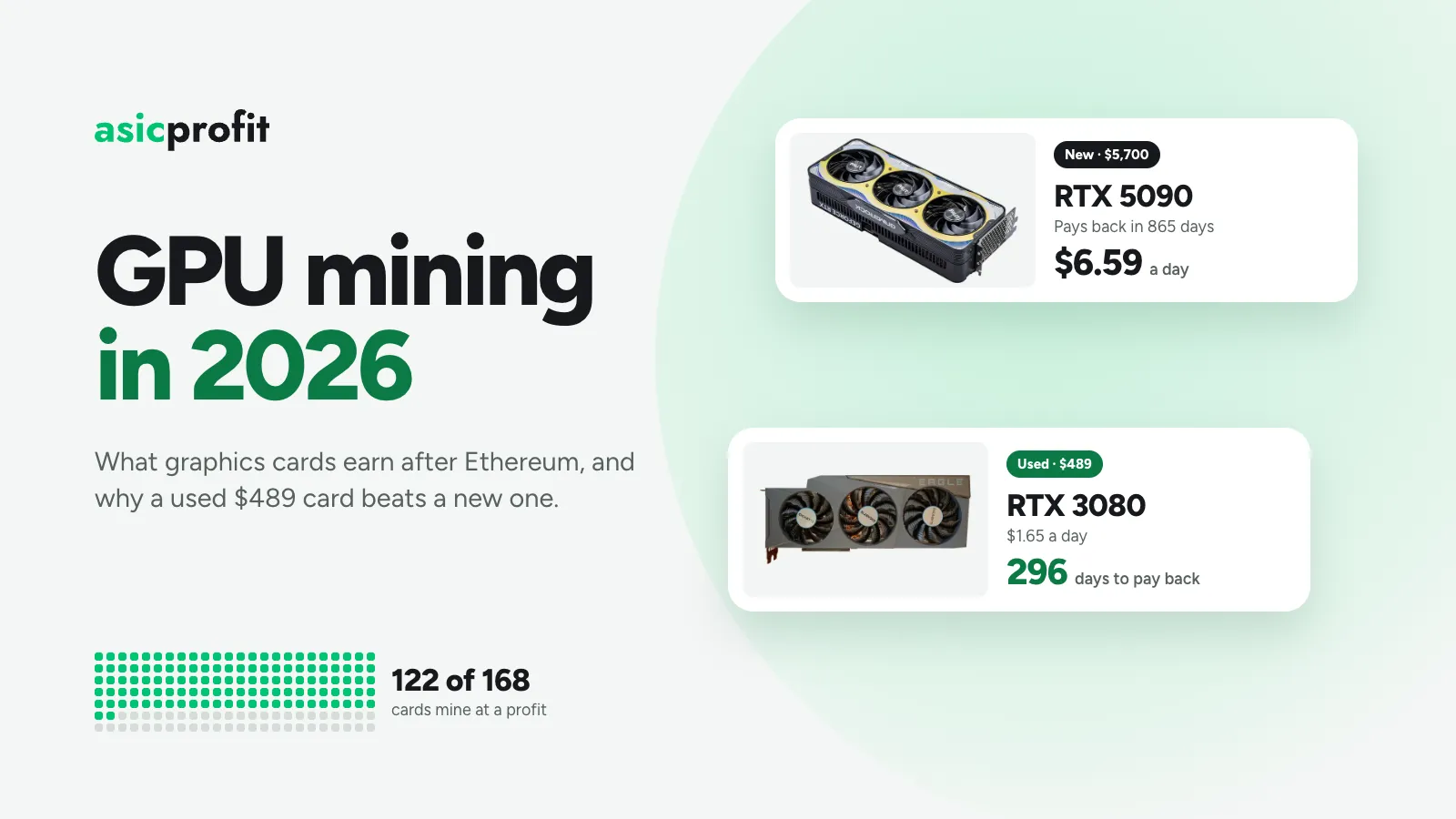
GPU Mining in 2026: What Graphics Cards Earn After Ethereum
Ethereum left in 2022, but a new coin brought graphics cards back in 2026. What GPUs earn today, which coins they mine, and why a $489 RTX 3080 beats a $5,700 RTX 5090 on payback.
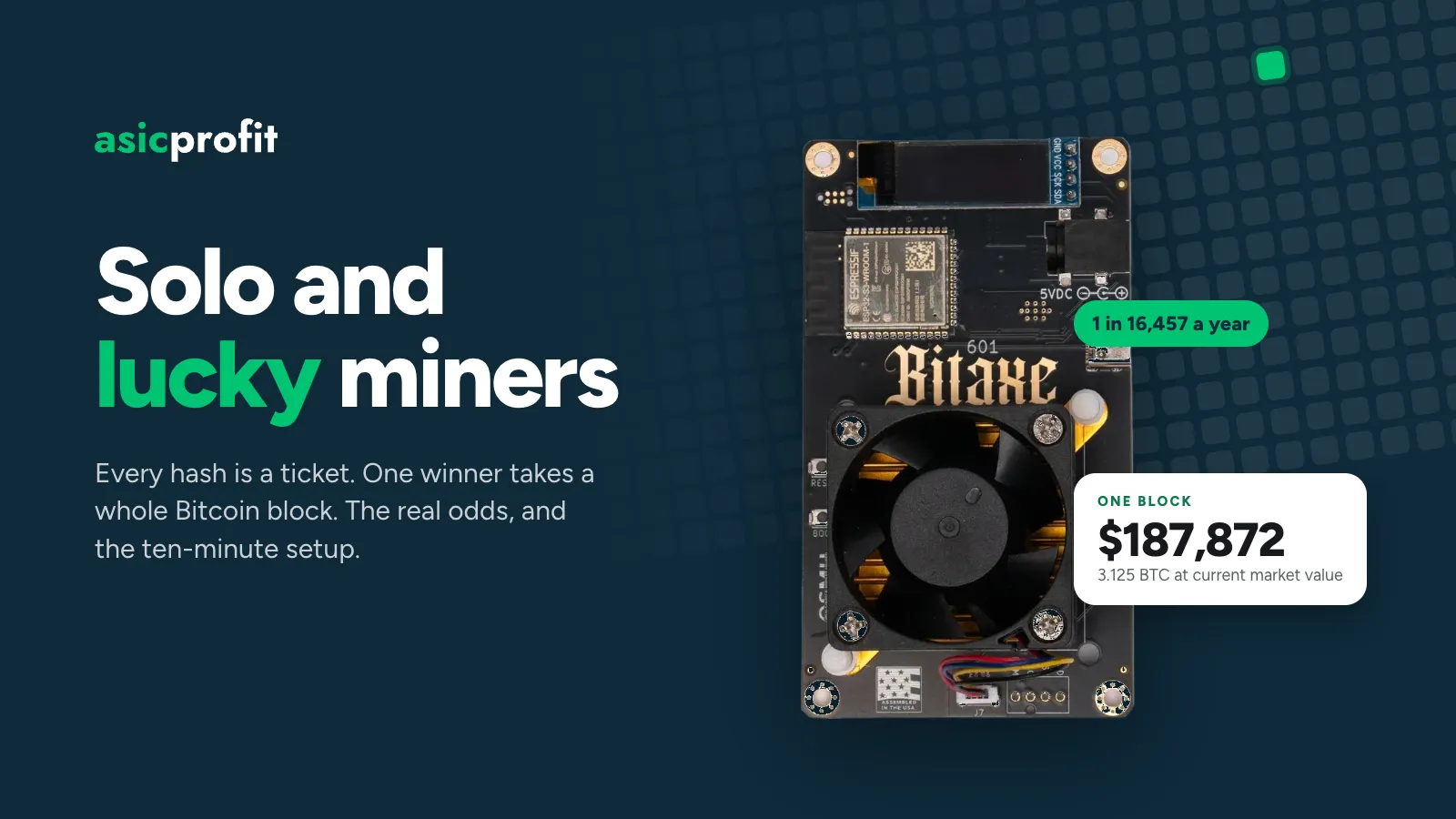
Solo and Lucky Miners: A Bitcoin Lottery Ticket on Your Desk
A $45 miner the size of a phone can find a whole Bitcoin block worth $187,872 at current market value, if it gets lucky. What solo and lucky miners are, what the odds really are, and how to set one up in ten minutes.
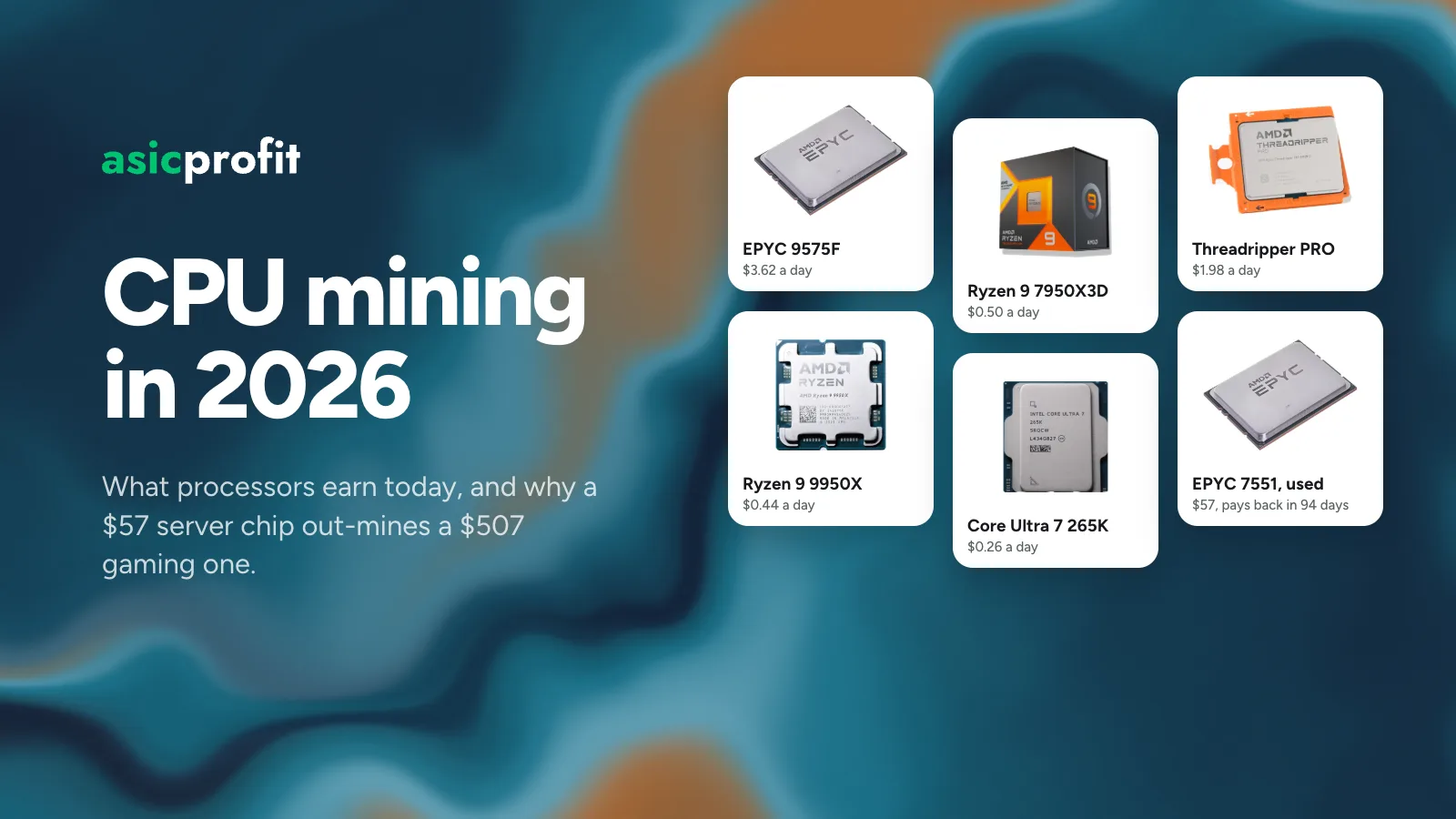
CPU Mining in 2026: The Last Place Your Own Computer Can Still Mine
Bitcoin belongs to ASICs and GPUs lost Ethereum, but a processor still mines Monero on equal terms. What CPUs earn today, why old server chips beat new gaming ones, and how to start in 20 minutes.